24/7 water damage help in Murrieta, CA | Serving 92562 & 92563
24/7 water damage help in Murrieta, CA | Serving 92562 & 92563
Services
After a burst pipe, appliance leak, roof leak or storm, water extraction removes the standing water. The water that soaked into drywall, framing, subfloor and the slab is still there afterward. Structural drying removes it with air movers and dehumidifiers, measured every day until each material is back to normal. Murrieta Flood Damage dries homes and businesses across Murrieta’s 92562 and 92563 ZIP codes.
How can we help?
We answer 24 hours a day, 7 days a week.
Overview
Good to know
Murrieta's hot, dry summers can make a wet floor look dry within a day. Moisture readings show what is still wet in the subfloor and behind baseboards.
Drywall, baseboards and carpet can feel dry on the surface while the framing, insulation and subfloor behind them are still wet.
Wet drywall, wood and carpet pad give mold what it needs. Drying fast is the most reliable way to keep it from starting.
Hardwood and laminate swell as they absorb water. Controlled drying can bring hardwood back flat if it starts in time.
An odor that lingers after a leak usually means something in the structure has not dried.
Our process
01
Every wet area is mapped with moisture meters and thermal imaging, and a drying goal is set for each material: the reading of the same material in a dry, unaffected part of the house.
02
Air movers and dehumidifiers are placed for the size of the wet area and the materials involved. Wall cavities and cabinets get their own airflow where needed.
03
Moisture and psychrometric readings (temperature, humidity and GPP) are taken and logged every day. Equipment is moved, added or removed as each area dries.
04
Equipment comes out only when every material has reached its drying goal. The final readings are documented for you and your insurance company.
Most homes dry in three to five days. Concrete slabs, hardwood and water inside wall cavities can take longer.
Drying science
How full of moisture the air is compared with how much it could hold at that temperature. Drying works by keeping it low so materials give up their water.
The actual amount of water in the air. Comparing GPP outside the dehumidifier with the air coming out shows whether it is pulling enough water.
The temperature at which air can't hold any more moisture and it condenses on surfaces. Keeping the dew point well below room temperature stops water from settling back on walls and windows.
Air movers push dry air across wet surfaces so water evaporates faster. Dehumidifiers then pull that water out of the air.
The target reading for each material, taken from the same material in an unaffected room. A wall is dry when it matches that reading, not when it feels dry.
The IICRC S500 groups losses into Class 1 to 4 by how much surface is wet and how deep the water sits. Class 4 means water in hard-to-dry materials such as hardwood, concrete and plaster, which need specialty drying.
Equipment
Low grain refrigerant (LGR) dehumidifiers pull water from the air by cooling it below the dew point. They do most of the work on a typical water loss.
These use a moisture-absorbing wheel instead of cooling, so they can reach very dry air. They are used for hardwood, concrete and other Class 4 drying.
High-velocity fans aimed along walls and across floors to speed evaporation.
Air is pushed into wall cavities through small openings, and mats over hardwood pull water from between the boards, so less has to be torn out.
Meters measure moisture in each material, thermal cameras find wet areas behind surfaces, and hygrometers measure humidity and temperature.
Scope
Save or replace
Drywall, insulation and flooring soaked by clean water can often be dried in place when drying starts quickly. That saves tearing out and rebuilding.
Drying is one stage of our full Murrieta water damage restoration service, from extraction to repairs.
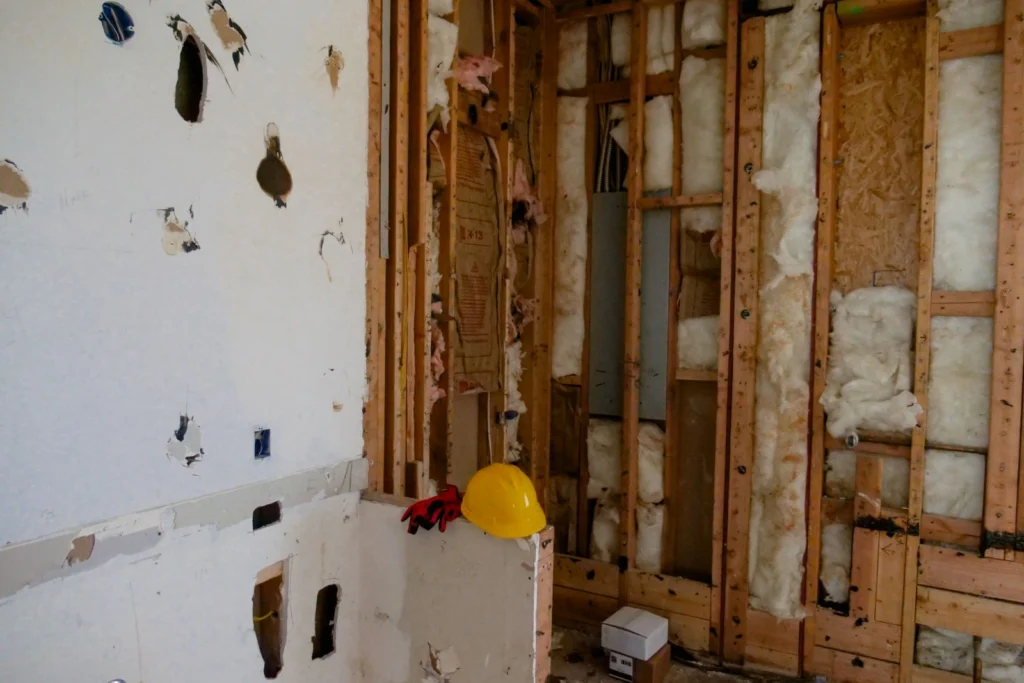
Materials come out when they are soaked by gray water or black water, when they have lost their strength, or when readings show they won’t reach their drying goal in a reasonable time. Insulation inside a wet wall cavity is usually removed because it holds water.
Murrieta
Most Murrieta homes sit on concrete slabs. Concrete holds water and dries slowly, so a slab under wet carpet or flooring often sets the length of the whole job. With the AC air handler in the attic, a clogged condensate line can soak ceiling drywall and insulation that need drying from above as well as below.
We work only in Murrieta’s 92562 and 92563 ZIP codes, from La Cresta and Bear Creek to Spencer’s Crossing and Murrieta Hot Springs. Crews are based in Murrieta, not dispatched from elsewhere in Riverside County.
Good to know
Cost depends on the size of the wet area, the class of water loss, how many air movers and dehumidifiers are needed and how many days they run. You get a written scope before work begins.
When the water damage is covered, drying is usually covered with it. Adjusters expect daily moisture readings, a record of air mover and dehumidifier days, and a final dry verification, and the drying log provides all three.
Questions answered
The questions we hear most about drying a home.
Most homes take three to five days. Slabs, hardwood and wet wall cavities can take longer. Repairs start after the final readings confirm everything is dry.
It’s best not to. The equipment is loud, but switching it off lets humidity rise again and can add a day or more to drying.
A rented unit can help with a small spill, but it can’t tell you whether the framing or subfloor is dry. Without readings, materials often get closed up while still wet, which is how mold and odor start.
Each material is checked against its drying goal, the reading of the same material in a dry part of the house. Equipment comes out only when every reading matches.
It’s the IICRC’s training and certification in drying buildings, covering moisture measurement, airflow, dehumidification and drying goals. Applied Structural Drying (ASD) builds on the Water Damage Restoration Technician (WRT) course.
It depends on the size of the wet area, the materials and the class of water loss. The count is set on day one and adjusted each day as areas dry.
The sooner drying starts, the more can stay in place. Call (951) 364-1418 any time, day or night.
Murrieta Flood Damage
41690 Ivy St, Murrieta, CA 92562
Open 24/7